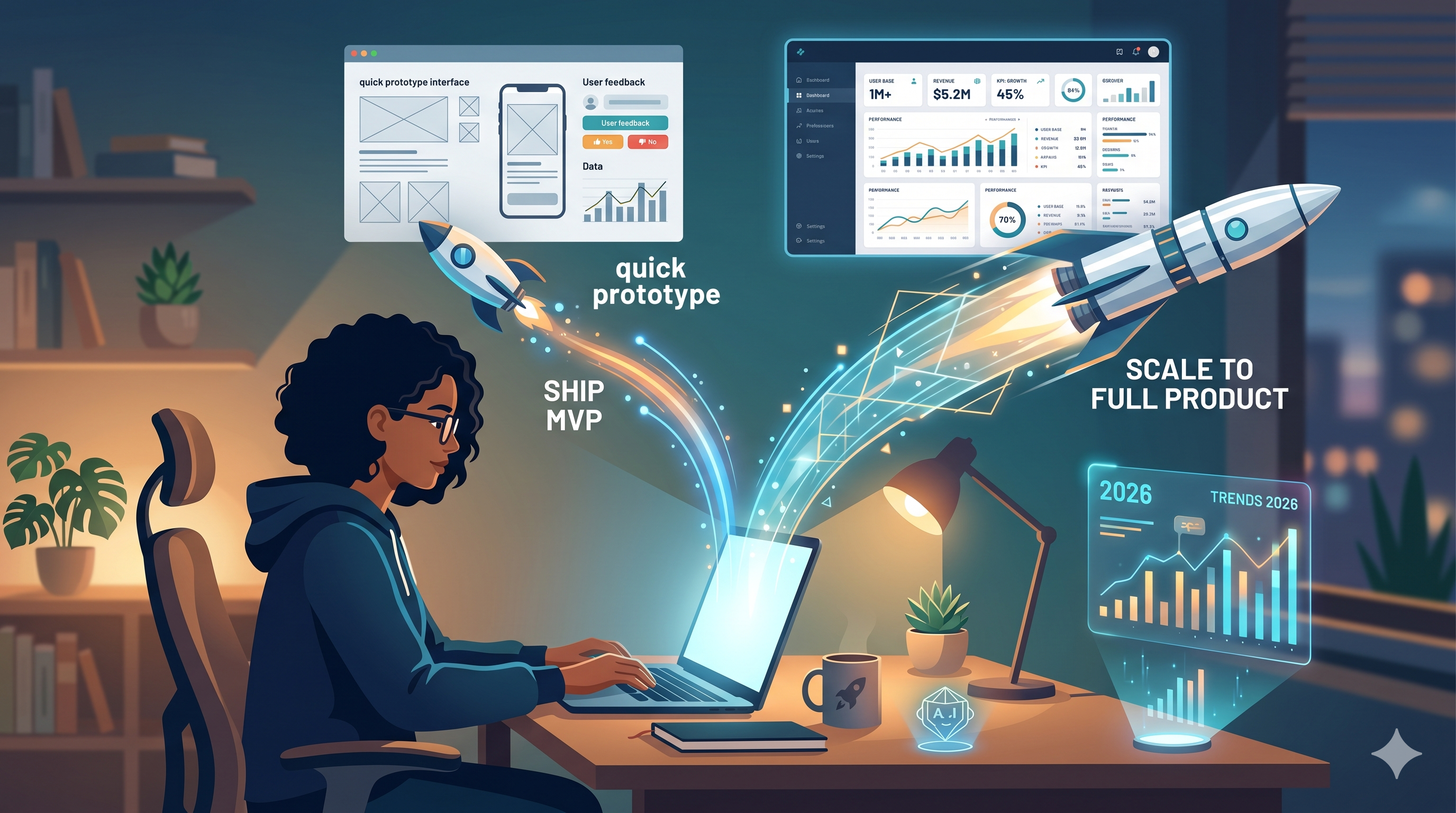
Most startups do not die because the idea was bad. They die because the first version of the product, the MVP, was built in a way that quietly burned through time, cash, and customer trust before anyone realized what was happening.
CB Insights has been tracking startup postmortems for years, and the same patterns keep showing up: no market need, ran out of money, wrong team, got out-competed. When you dig into those founder write-ups on Medium, Indie Hackers, Y Combinator forums, and Lean Startup case studies, almost every one of them traces back to a handful of MVP decisions made in the first 90 days.
If you are about to build your MVP, or you already shipped one and the numbers are not moving, these are the seven mistakes you cannot afford to make. We have seen all of them at Dafe Software, and we have rebuilt enough broken MVPs to know exactly how to avoid each one.
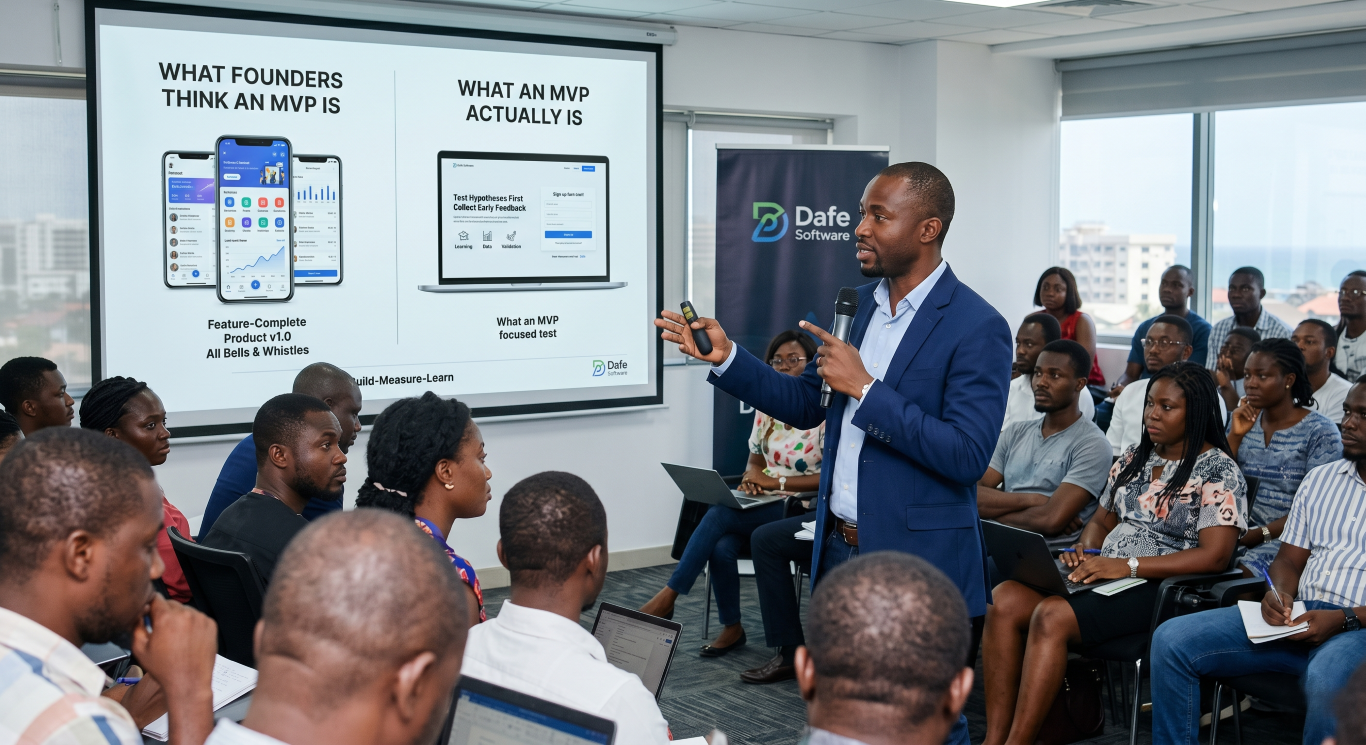
1. Treating Your MVP Like a Final Product
The biggest killer is also the most obvious: founders try to ship a finished product instead of a learning tool.
Eric Ries defined the MVP as the version of a new product that allows a team to collect the maximum amount of validated learning about customers with the least effort. That word, "learning," is the part most founders skip. They want it to look polished. They want every edge case handled. They want it to be impressive enough to share with their network.
So they spend six months and forty thousand dollars building something that should have taken six weeks and four thousand. By the time it launches, the market has shifted, the runway is thin, and nobody actually wanted half of what got built.
How to avoid it: Start with the smallest thing that proves or kills your core assumption. Airbnb began with two air mattresses and a one-page website. Dropbox started with a three-minute explainer video that captured 70,000 signups before a single line of production code was
written. Your MVP should embarrass you a little. If it does not, you waited too long.
2. Skipping Customer Discovery Before Writing Code
Steve Blank, who quite literally wrote the playbook on customer development, has one rule that founders keep ignoring: get out of the building.
A shocking number of MVPs are built entirely on founder intuition. No interviews. No problem-solution validation. No conversations with people who would actually pay for the thing. The founder is so in love with the solution that they forget to confirm the problem is real, painful, and worth paying to solve.
The result is a product that solves a problem nobody has, or that solves a real problem in a way nobody wants.
How to avoid it: Before you commission a single Figma file, run 15 to 25 customer discovery interviews. Ask about their current workflow, what is broken, what they have already tried, and what they would pay to fix it. If you cannot find people willing to talk to you about the problem for free, you will never find people willing to pay you to solve it.
3. Confusing "Minimum" With "Cheap and Broken"
There is a difference between minimum viable and minimum acceptable. Some founders read "MVP" and decide that means they can ship something buggy, ugly, and confusing, and that early users will forgive it.
They will not. First impressions in software are unforgiving. A clunky onboarding flow, a sign-up form that breaks on mobile, or a payment screen that looks like a phishing site will tank your conversion rate before anyone gets to your actual value proposition.
How to avoid it: Cut features ruthlessly, but never cut craftsmanship on the parts the user touches. Your MVP can have one feature instead of ten, but that one feature needs to work, load quickly, look trustworthy, and feel intentional. Minimum viable means smaller scope, not lower quality.
4. Over-Engineering the Tech Stack
This is the opposite mistake, and it is just as fatal. Founders, especially technical ones, fall into the trap of building for scale that does not exist yet.
Kubernetes for an app with zero users. A custom microservices architecture before product-market fit. A machine learning pipeline before the simple version is proven. Every hour you spend on infrastructure that solves tomorrow's problems is an hour you are not spending on validating today's hypothesis.
Articles from First Round Review and a16z consistently make this point: premature optimisation is the silent killer of early-stage startups.
How to avoid it: Pick a boring, well-supported stack. Use managed services. Lean on no-code or low-code tools where it makes sense. Bubble, Webflow, Supabase, and Firebase have shipped countless MVPs that later raised serious capital. The goal of your tech stack is to get to validated learning fast, not to impress a future CTO.
5. Ignoring Distribution Until After Launch
"If you build it, they will come" is the most expensive lie in startup history.
Founders pour everything into the product and assume the launch will take care of itself. Then launch day arrives, they post on Product Hunt and a couple of Slack groups, get 200 visits, three signups, and silence. The product is fine. The problem is that nobody knew it existed, and the founder never built the muscle, audience, or channel to fix that.
How to avoid it: Start building your distribution at the same time you start building the product. That means audience building on the platform your customers actually use, a waitlist that grows weekly, content that ranks for buying-intent keywords, and at least one repeatable acquisition channel tested before launch. If you cannot get 100 people on a waitlist before the MVP ships, getting 1,000 paying users after it ships will be brutal.
6. Failing to Define What Success Looks Like
If you cannot describe, in one sentence, what would make your MVP a success, you have already lost.
Most founders launch with vague hopes. "Get some users." "See if people like it." "Get some feedback." None of those are measurable, which means three months from now you will have no idea whether to keep going, pivot, or shut it down. You will rely on vibes, and vibes are how startups stay alive on life support for two extra years before quietly dying.
How to avoid it: Pick one north-star metric and two or three leading indicators before you launch. For a SaaS MVP that might be: 50 paying users within 60 days, with a week-four retention above 40 percent. For a marketplace, it might be 10 completed transactions per week within 90 days. Write the number down. Put it where your team can see it. Make every decision against it.
7. Trying to Build It Alone Without the Right Expertise
The final mistake is the one that quietly multiplies all the others. Founders try to wear every hat. Product. Design. Engineering. QA. Marketing. Customer support. Investor updates. Hiring.
The math does not work. You cannot do six full-time jobs in 24 hours, and the corners you cut to try will show up in your product. Half-baked features. Skipped user research. Tech debt that becomes a tax on every future release. Burnout that takes the founder out before the company gets a real shot.
The founders who get to product-market fit fastest are almost always the ones who got help with the parts they were weakest at, especially the build itself.
How to avoid it: Partner with a team that has shipped MVPs before, knows what to cut, knows what to protect, and can move at startup speed without breaking everything. That is exactly what we do at Dafe Software. We have built MVPs across SaaS, fintech, edtech, marketplaces, and AI products, and we know the difference between the corners that are safe to cut and the ones that kill the company.
Your MVP Should Not Be a Gamble
Every mistake on this list comes from the same root cause: treating the MVP as the product instead of the experiment. Get that mindset right, and most of the other decisions become obvious. Get it wrong, and no amount of capital or talent will save you.
If you are serious about getting your MVP into the market in weeks instead of months, with the right scope, the right stack, and the right metrics from day one, this is what we do every day.
Book a free MVP strategy call with Dafe Software. In 30 minutes, we will pressure-test your idea, map the smallest version that proves the core assumption, and give you a realistic timeline and budget to ship it. No fluff. No upsell. Just a clearer path to launch.
 By
By 
 MVP Development