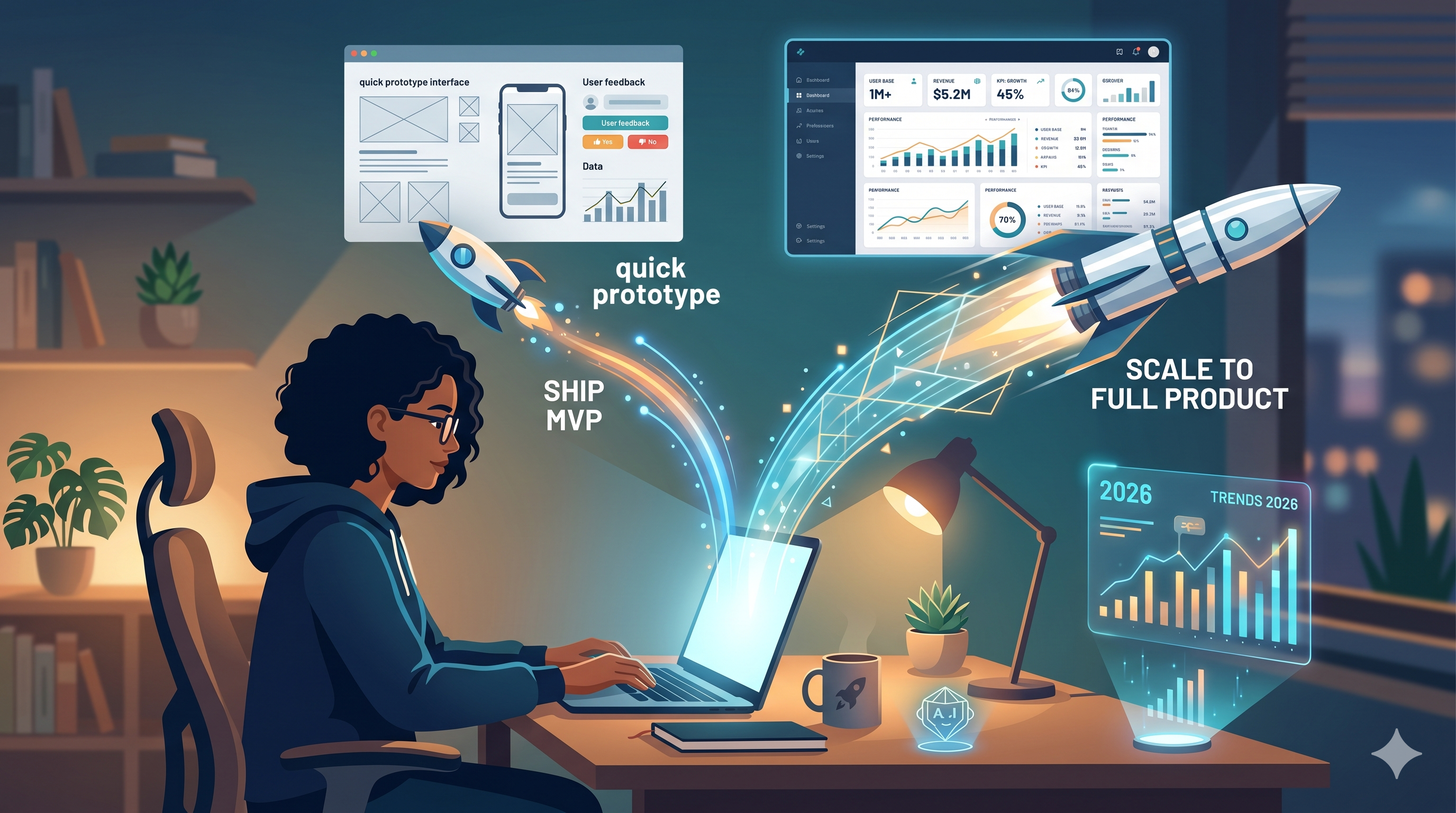
Most startups die not because the founders lacked vision, but because they spent six months building something nobody wanted. The data backs this up. CB Insights still ranks "no market need" as the number one reason startups fail, sitting at roughly 35 percent of all post-mortems. The cure is not more planning. It is shipping a Minimum Viable Product fast enough to learn before your runway evaporates.
Thirty days is the sweet spot. Long enough to build something real. Short enough to force the hard tradeoffs that separate a focused product from a bloated wishlist. This guide walks you through the exact week-by-week process we use at Dafe Software to take founders from idea to launched MVP in a single month.
What an MVP Actually Is (and What It Is Not)
Eric Ries defined the MVP in The Lean Startup as
"that version of a new product which allows a team to collect the maximum amount of validated learning about customers with the least effort."
Read that twice. The point is learning, not impressing.
An MVP is not a half-finished product. It is not a prototype you show to investors and quietly shelf. It is the smallest functional version of your idea that real users can pay for, complain about, and tell their friends about.
Dropbox started as a three minute video. Airbnb started with the founders renting out air mattresses in their own apartment. Zappos started with the founder photographing shoes at local stores and listing them online. None of these were polished. All of them validated demand before a single line of scalable code was written.
If your MVP cannot answer the question "will people use and pay for this," it is not an MVP. It is a vanity project.
Why Thirty Days Works
Anything shorter than three weeks rarely produces something a real user can interact with. Anything longer than five weeks invites scope creep, perfectionism, and the slow death of momentum. Thirty days creates a forcing function. It tells your team "this feature does not make the cut" without you having to be the bad guy. The deadline does it for you.
There is also a psychological component. Founders who commit to a 30 day window stay obsessed. Founders who give themselves "a few months" get distracted by Twitter, fundraising, and the temptation to redesign the logo for the fourth time.
Week 1: Validate Before You Build (Days 1 to 7)
This is the week most founders skip, and it is the one that separates a product from a hobby.
Day 1 to 2: Define the Core Problem
Write down, in one sentence, the specific problem your product solves. Then write down who exactly has that problem. "Small business owners" is not a customer. "Independent personal trainers in North America who manage between 15 and 40 clients and currently use spreadsheets for scheduling" is a customer.
If you cannot describe your user this precisely, you are not ready to build. Spend more time here.
Day 3 to 4: Talk to Real Humans
Aim for ten conversations with people who match your customer profile. Do not pitch. Do not demo anything. Ask about their current workflow, what frustrates them, what they have tried, and what they would pay to solve. The goal is to find out if the problem you imagined actually exists in the wild.
Rob Fitzpatrick's The Mom Test is the bible here. Read it on day one if you have not already.
Day 5 to 6: Map the Single Critical Path
Your MVP should do one thing well. Identify the single user journey that delivers the core value. For a food delivery app it might be "browse a menu, place an order, see it arrive." Everything else, from loyalty programs to social sharing, is a future release.
Day 7: Lock the Scope
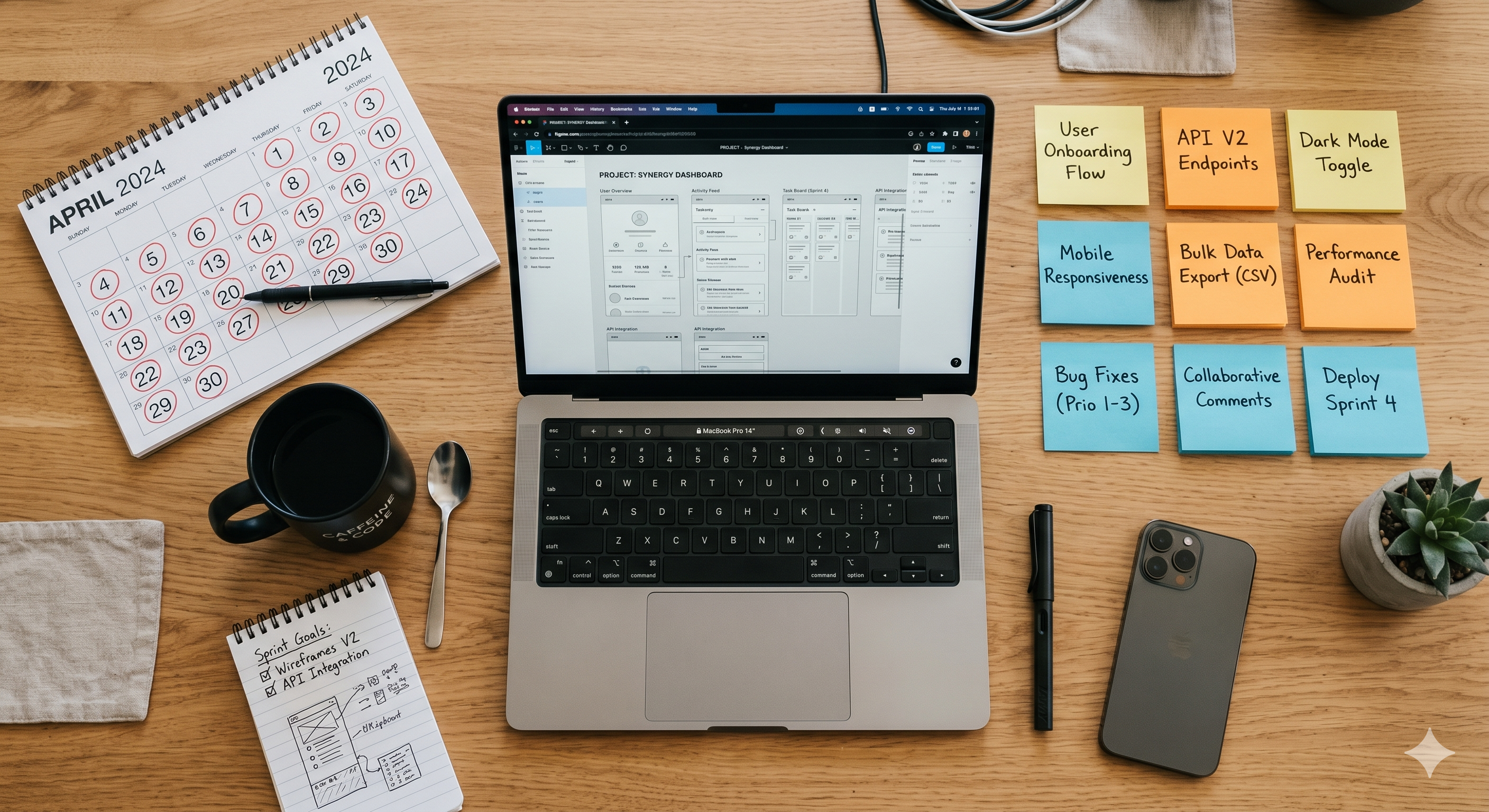
Write a one page spec. List the three to five features that absolutely must exist for the critical path to work. Then list every other idea you have on a separate document called "Version 2." Sign your name at the bottom. This page is your contract with yourself.
Week 2: Design and Architect for Speed (Days 8 to 14)
Day 8 to 10: Wireframe the User Flow
Skip the high fidelity mockups for now. Use Figma, Balsamiq, or even pen and paper to sketch every screen in your critical path. The goal is to make sure the flow makes sense before you write code.
Test these wireframes with three of the people you interviewed in Week 1. If they cannot figure out what to click, redesign. This costs you hours now and saves you weeks later.
Day 11 to 12: Choose a Pragmatic Tech Stack
The best stack for an MVP is the one your team can ship with fastest. For most early stage products that means something like Next.js or React on the frontend, Node or Python on the backend, and a managed database like Supabase, Firebase, or PlanetScale. If you can avoid setting up your own infrastructure for thirty days, do it.
No bonus points for using bleeding edge tools nobody on your team has used before. You are not building for scale yet. You are building to learn.
Day 13 to 14: Set Up the Skeleton
Stand up your repo, deploy a hello world to production, wire up authentication, and connect your database. By end of Week 2 you should have a deployable shell that does nothing useful but proves your pipeline works. This avoids the all too common scenario where you finish building features and then lose three days fighting with deployment.

Week 3: Build the Core (Days 15 to 21)
This is where the real work happens. You have seven days to build the features on your one page spec. Nothing else.
Daily Standups, Even If You Are Solo
Every morning, write down what you finished yesterday, what you are doing today, and what is blocking you. If you are working alone, post it in a channel only you can see. The act of writing it down keeps you honest.
Build Vertically, Not Horizontally
Do not build the entire database, then the entire backend, then the entire frontend. Build one complete feature end to end, ship it to staging, then move to the next. This way if you run out of time on day 21 you still have working features instead of three half built layers.
Use Existing Tools Aggressively
Authentication? Use Clerk or Auth0.
Payments? Stripe Checkout, not a custom flow.
Email? Resend or Postmark.
File uploads? Uploadthing or S3 with a wrapper.
Your job is not to reinvent these systems. Your job is to validate your idea.
Cut Ruthlessly
Around day 18 you will hit a wall. A feature is taking longer than expected, an edge case is uglier than you thought, or a third party API is misbehaving. This is the moment to cut, not to push. Ask yourself, "can I ship without this and still test the core hypothesis?" Almost always the answer is yes.
Week 4: Polish, Test, and Launch (Days 22 to 30)
Day 22 to 24: Internal Testing and Bug Bash
Click through every flow yourself. Then have two or three friends or teammates do the same. Track every bug, then fix only the ones that block the critical path. A weird hover state on a settings page is not a launch blocker. A payment button that fails 20 percent of the time is.
Day 25 to 26: Beta with Real Users
Invite ten of the people from your Week 1 interviews to use the product. Watch them use it without coaching. Take notes when they hesitate, get confused, or ask "wait, how do I do X?" These are your highest signal data points.
Day 27 to 28: Final Polish and Onboarding
Now you can fix the cosmetic stuff. Tighten copy. Add a simple onboarding flow if users keep getting stuck. Make sure your landing page exists, loads fast, and has a clear call to action.
Day 29: Prepare for Launch
Set up basic analytics. Mixpanel, PostHog, or even Plausible plus a simple event tracker is enough. You need to know what users do once they sign up, not just how many sign up. Write your launch announcement. Schedule social posts.
Day 30: Ship It
Post on Product Hunt, Hacker News Show HN, your LinkedIn, your founder communities, and any subreddit where your audience hangs out. Email everyone you interviewed in Week 1 and offer them early access. Then watch the analytics and start your next learning loop.

The Pitfalls That Kill Most 30 Day MVPs
Building for investors instead of users. If your MVP is designed to look impressive in a pitch deck, you will overbuild and underlearn. Build for the user. Investors follow traction.
Falling in love with the tech. Choosing a new framework just because you wanted to try it adds days you do not have. Boring tech ships faster.
Adding "just one more feature." Every founder hears this voice. Ignore it. The feature you add on day 25 is the feature that pushes you to day 50.
Skipping user conversations. Building in a vacuum is the most expensive mistake in software. Your assumptions are wrong in ways you will only discover by talking to humans.
Treating launch as the finish line. Launch is the start. The real work is the learning loop that follows.
A Realistic Tech Stack for a 30 Day MVP
There is no single right answer, but here is a stack that has shipped dozens of MVPs at Dafe Software with minimum drama:
Frontend with Next.js or React, hosted on Vercel. Backend with Node, FastAPI, or Supabase Edge Functions. Database with PostgreSQL via Supabase or Neon. Authentication with Clerk or Supabase Auth. Payments with Stripe Checkout. Email with Resend. Analytics with PostHog. Hosting and CI handled by Vercel or Railway.
This stack costs almost nothing for the first thousand users, scales to tens of thousands without rewrites, and does not require a DevOps engineer to maintain. That is exactly what you want at this stage.
What Happens After Day 30
You will have one of three outcomes. Either users love it and you start iterating toward product market fit. Or users like it but something is off, in which case you pivot the offering. Or users do not care, which is painful but priceless information that just saved you six months of building the wrong thing.
All three outcomes are wins. The only loss is taking six months to find out.
Ready to Build Your MVP in 30 Days?
If reading this made you nod along but also feel slightly nauseous about pulling it off solo, that is normal. Building a focused, launch ready MVP in thirty days is hard. Doing it while also running your business, raising money, and trying to sleep is harder.
This is what we do at Dafe Software. We have shipped MVPs for founders in fintech, healthtech, edtech, e-commerce, and SaaS, all on tight timelines, all built to validate the core hypothesis without burning runway. Our team handles the discovery, design, build, and launch so you can stay focused on customers and capital.
If you have a clear idea and want to see it live in users' hands inside a month, we would love to talk. Book a free 30 minute MVP strategy call with our team and we will map out exactly what your MVP scope should look like, what it would cost, and what timeline is realistic for your idea.
The best time to validate your startup was yesterday. The second best time is the next thirty days.
Dafe Software builds and ships MVPs for early stage founders. Trusted by startups across North America, Africa, and Europe to turn ideas into shippable products fast.
 By
By 
 MVP Development