In 2026, building a business without thinking about software is like opening a storefront without a roof. Every meaningful business decision now flows through some kind of digital system, whether it is a customer record, a payment flow, an inventory log, or an internal approval pipeline. The companies pulling ahead this year are not the ones spending the most on technology. They are the ones spending it on the right technology, built specifically for how they actually work.
That is what custom software application development looks like in 2026: focused, lean, and shaped around the business instead of the other way around.
If you have been told that custom software is too expensive, too slow, or only for enterprise giants, the last twelve months have quietly rewritten that story. Let us walk through what has actually changed, why founders and operators are rethinking their software stack, and how to take the first step without burning runway.
Why 2026 is a Turning Point for Custom Software
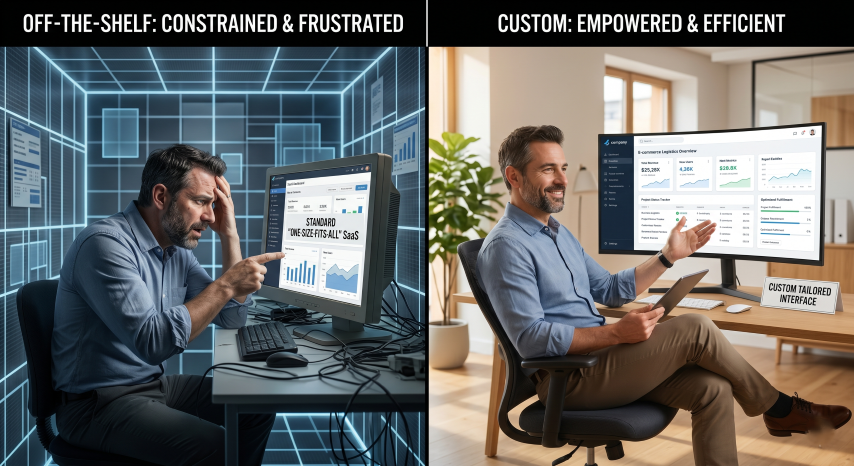
For years, off-the-shelf SaaS was the default answer. Need a CRM? Buy one. Need project management? Buy one. Need a billing engine? Buy one. The promise was speed and simplicity. The reality, for many businesses past a certain stage, has been a tangled stack of fifteen subscriptions, none of which talk to each other cleanly, and all of which charge per seat every single month.
A few shifts have made 2026 the year that math finally flipped.
First, AI assisted development has compressed timelines. Tasks that used to take a senior engineer two weeks now take two days. That is not marketing language, it is what teams are reporting on the ground. Smaller teams can now ship production grade applications in the same window it used to take to scope a proposal.
Second, the cost of cloud infrastructure has dropped or stabilized across most major providers, while the developer tooling around it has matured. Serverless, edge functions, and managed databases mean a custom app no longer requires a dedicated DevOps engineer to keep the lights on.
Third, and this is the quiet one, businesses are tired of paying SaaS rent. When you add up three years of subscription fees for tools you outgrew, custom often becomes the cheaper path, not the expensive one.
What Custom Software Application Development Actually Means in 2026
The phrase gets thrown around loosely, so it is worth being concrete. Custom software application development is the process of designing, building, and maintaining a software product that is shaped around one specific business, one specific workflow, or one specific market.
It is not a template. It is not a slightly reskinned WordPress site. It is software that exists because someone looked at how a business actually operates and decided to build the exact tool for that operation.
In practice, this includes:
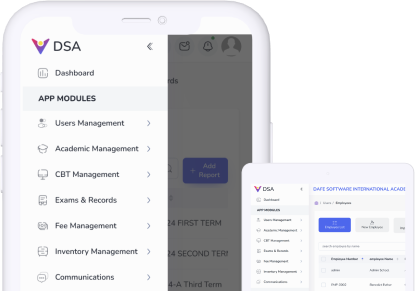
A custom internal dashboard that pulls data from your point of sale, your accounting tool, and your booking system into one screen that your operations manager actually uses every morning.
A customer facing mobile or web application that lets your clients self serve in ways your generic platform never allowed.
An AI powered automation layer that handles the repetitive parts of your workflow, like classifying support tickets, generating quotes, or routing leads.
A marketplace, booking platform, fintech tool, healthtech tool, or logistics tool that simply does not exist as a buyable product because your business model is too specific.
The Most Important Trends Shaping Custom Software in 2026
Five trends are doing most of the work in reshaping this space.
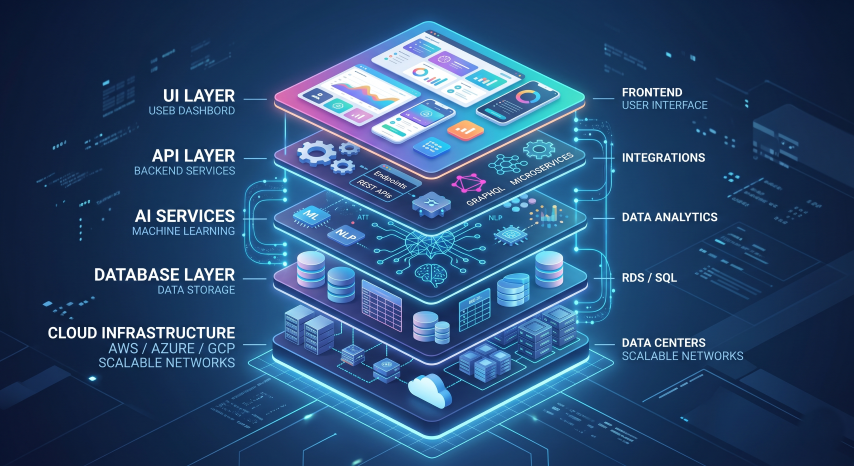
1. AI is no longer a feature, it is a layer. In 2024 and 2025, most teams were bolting AI on as a chatbot or a writing assistant. In 2026, the better builds embed AI into the data layer itself. Think of it as a co worker that classifies, summarizes, predicts, and routes work inside your custom app, without needing the user to ask it to.
2. Composable architectures have replaced monoliths. Modern custom apps are built as a set of services that snap together, not one giant codebase. This means you can swap your payments provider, your AI model, or your analytics tool without rebuilding the application.
3. Vertical SaaS is the new frontier. Founders are no longer trying to build the next general purpose tool. They are building deeply specific software for one industry: dental clinics, logistics dispatchers, agricultural cooperatives, faith based communities, niche manufacturing. Custom development is the engine behind this wave.
4. Compliance and security are baked in earlier. GDPR, SOC 2, HIPAA, PCI, and a growing list of regional data laws have made it unwise to retrofit security. Good custom development teams in 2026 architect for compliance from day one, not at the audit.
5. The MVP is back, but smarter. Teams are no longer trying to build the full vision on day one. The minimum viable product, planned carefully and shipped fast, is once again the gold standard. The smartest founders are using cost calculators and prototyping sprints to validate ideas before committing the full budget.
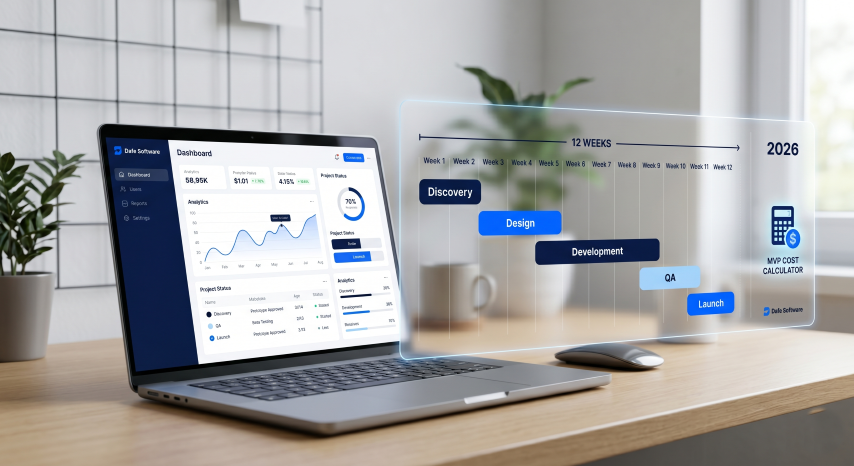
Speaking of which, if you have an idea you are weighing right now, you can get a transparent estimate in under five minutes using our MVP Cost Calculator. It will not ask you to book a sales call. It will just give you a real number to work with.
Custom Software vs Off the Shelf: The Honest Comparison
Both have a place. The mistake is using the wrong one for the job.
Off the shelf software wins when: the problem is universal (email, calendars, video conferencing), your team is small, you need it tomorrow, and you do not need deep customization.
Custom software wins when: the workflow is unique to your business, the tool needs to integrate with other tools you already use, you are paying significant ongoing fees for SaaS that almost fits, you want to own your data and your roadmap, or the software itself is part of your product offering.
A useful rule of thumb: if you are spending more than 1,500 dollars a month on a stack of tools that still requires manual work to glue together, you are usually within 12 to 18 months of breaking even on a custom build that replaces the painful parts.
Industries Being Transformed Right Now
A short list of where custom software application development is doing the heaviest lifting in 2026:
Healthcare and telehealth: custom patient intake, scheduling, and AI assisted triage platforms that respect regional privacy laws.
Fintech and embedded finance: lending engines, wallet platforms, and compliance tooling built for specific markets, especially across Africa, Southeast Asia, and Latin America.
Logistics and supply chain: dispatch, route optimization, and real time tracking tools tailored to local infrastructure realities.
Education and training: learning platforms with built in assessment, certification, and community features that off the shelf LMS products cannot match.
Real estate and property management: owner facing portals, tenant communication tools, and maintenance workflow systems.
Retail and ecommerce operations: custom order management systems, loyalty engines, and analytics layers that sit above Shopify, WooCommerce, or custom storefronts.
Faith based and community organizations: member management, giving platforms, and event coordination tools shaped around how the community actually operates.
If your industry is not on this list, that is usually a good sign. It means custom software in your space is still an underused advantage.
The Real Benefits, Without the Buzzwords
Skip the marketing language for a moment. Here is what custom software actually gives a business that uses it well.
You stop paying for features you do not use. SaaS subscriptions are priced for the heaviest user. Custom software is priced for you.
Your team stops switching tabs. Workflows that used to live across four tools live in one screen. Hours come back to the week.
Your data stays yours. You decide where it sits, who sees it, and how it is exported. No vendor lock in.
You can ship features your competitors cannot. When a customer asks for something new, you build it. You do not wait for a vendor roadmap or vote on a feature request board.
Your software grows in value over time, instead of becoming a recurring cost line. A well built custom application is an asset on the balance sheet, not a tax on cash flow.
What a Good Custom Software Development Partner Looks Like in 2026
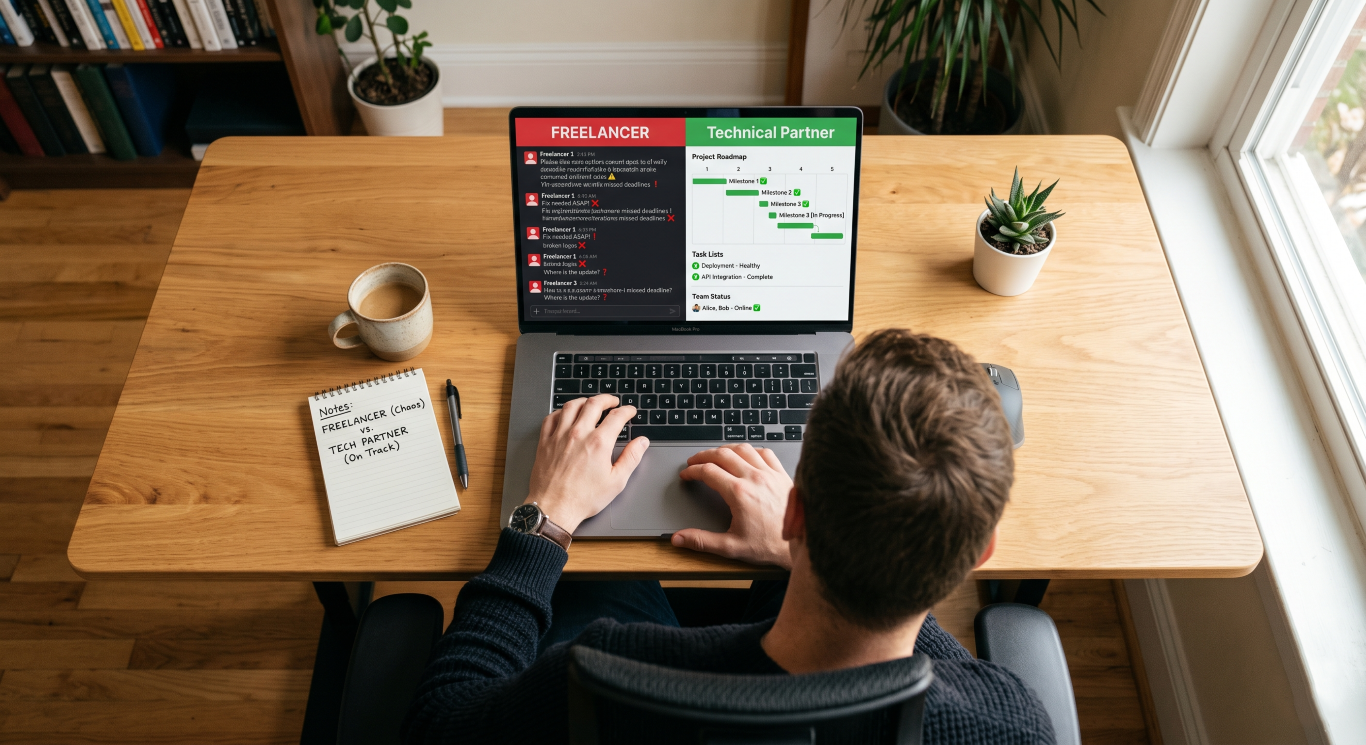
Not every agency builds well, and not every freelancer builds responsibly. Here is what to look for when you are choosing who to trust with your build.
They ask about your business before they ask about your tech stack. The technology should be the last thing decided, not the first.
They show you working prototypes early. A serious team will have something clickable in front of you within the first two to four weeks.
They are transparent about cost and timeline. Vague proposals are a red flag. Look for itemized scopes, weekly check ins, and clear assumptions.
They build for handover. Even if they maintain the product long term, you should always be able to take the code, the documentation, and the infrastructure access with you.
They have shipped in your industry, or a close cousin. Domain familiarity shortens the learning curve dramatically.
They speak plainly. If you cannot understand the proposal, the build will not go well either.
At Dafe Software, this is the model we have built our practice around. We ship MVPs in 6 to 12 weeks, build with modern composable architectures, and hand you a product you fully own.
How to Start Without Overcommitting
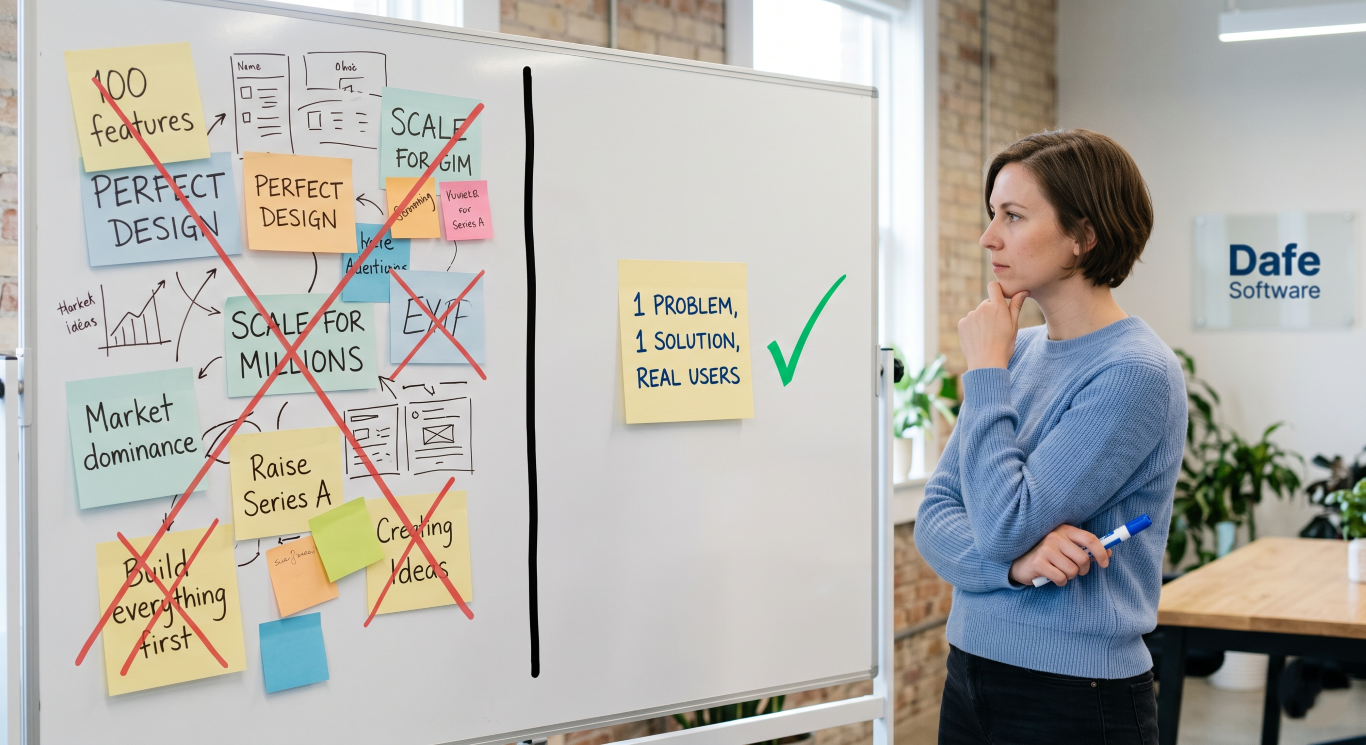
The biggest mistake we see is founders trying to build the full vision on day one. The second biggest mistake is sitting on an idea for a year because the cost feels unknowable.
Both are solvable with the same approach: scope tightly, estimate honestly, ship the MVP, then iterate.
A focused MVP usually includes only the three to five features that prove the core idea. Everything else waits for real user feedback. This protects your budget, sharpens your product instinct, and gives you something investors and early customers can actually use.
If you are at the stage where you are quietly turning the idea over in your head, your next move is not to write a 40 page spec. It is to get a rough cost estimate so you know whether the conversation is a 5,000 dollar conversation, a 25,000 dollar conversation, or a 250,000 dollar conversation. That single number changes everything about how you plan.
Use our MVP Cost Calculator to get a transparent estimate for your specific build. It takes about three minutes, it is free, and you get the number on screen instantly. No sales call, no email gate.
Common Questions We Get From Founders and Operators
How long does a custom software project actually take? A focused MVP typically lands between 6 and 12 weeks. A full production grade platform with integrations, compliance, and polish usually runs between 4 and 9 months. Anything faster is cutting corners. Anything slower is usually over scoped.
How much should I budget? For an MVP, most realistic ranges sit between 8,000 and 45,000 dollars depending on complexity. Full platforms range much wider. The calculator linked above will give you a tighter number based on your specific feature list.
What if my idea changes after we start? It will. Good development partners build in flex for that. Look for sprint based contracts, not fixed monolithic ones.
Should I hire in house instead? For most early stage and mid sized businesses, no. A senior engineer in 2026 costs roughly the same per year as a complete agency built MVP plus 6 months of iteration. Hire in house once the product is live and growing, not before.
Can custom software integrate with the tools I already use? Yes, and this is one of its biggest advantages. Custom apps are designed to plug into the SaaS tools that work for you and replace the ones that do not.
The Bottom Line
Custom software application development in 2026 is not the slow, expensive, enterprise only path it used to be. The tooling has matured, the timelines have shrunk, and the cost has come down. What remains is the same question every business owner has always faced: is your current software helping you grow, or is it quietly capping how fast you can move?
If the answer is the latter, the next step is not a six month research project. It is a five minute estimate.
Get your custom build estimate with the MVP Cost Calculator from Dafe Software and start the conversation with a real number in hand. When you are ready to ship, we are ready to build.
 By
By 
 Custom Software Development